
Researchers at the University of Oxford have developed and validated a novel, state-of-the-art gaseous hydrogen permeation platform. The system combines a bespoke leak-tight, high-pressure and high-temperature permeation cell, an ultra-high-vacuum downstream line, on-demand hydrogen generation and calibrated mass-spectrometric detection. This integrated design enables the reliable quantification of exceptionally low hydrogen fluxes, including those encountered near room temperature and at low hydrogen pressures.
Join Rongrui Li, Alfredo Zafra, Zachary D. Harris and Emilio Martínez-Pañeda as they demonstrate how native surface oxides and trace residual oxygen can strongly control hydrogen entry into metals while establishing a more sensitive and reproducible methodology for evaluating materials intended for hydrogen-facing applications.
Why is it important to measure hydrogen permeation directly in gaseous environments?
Hydrogen is expected to play a major role in decarbonising sectors that are difficult to electrify, but its wider use means that pipelines, storage vessels and other structural components will be exposed directly to hydrogen gas. In metals, hydrogen can enter the material, move through the microstructure and produce embrittlement, reducing ductility, fracture toughness and fatigue resistance.
Gas permeation provides a direct quantitative link between an applied hydrogen environment and the hydrogen flux entering and crossing a material. With such experiments, we can determine key transport properties such as diffusivity, permeability and solubility. These parameters are essential for material selection, component design and predictive models of hydrogen-assisted cracking.
How does a hydrogen gas permeation experiment work, and how does it differ from traditional electrochemical permeation?
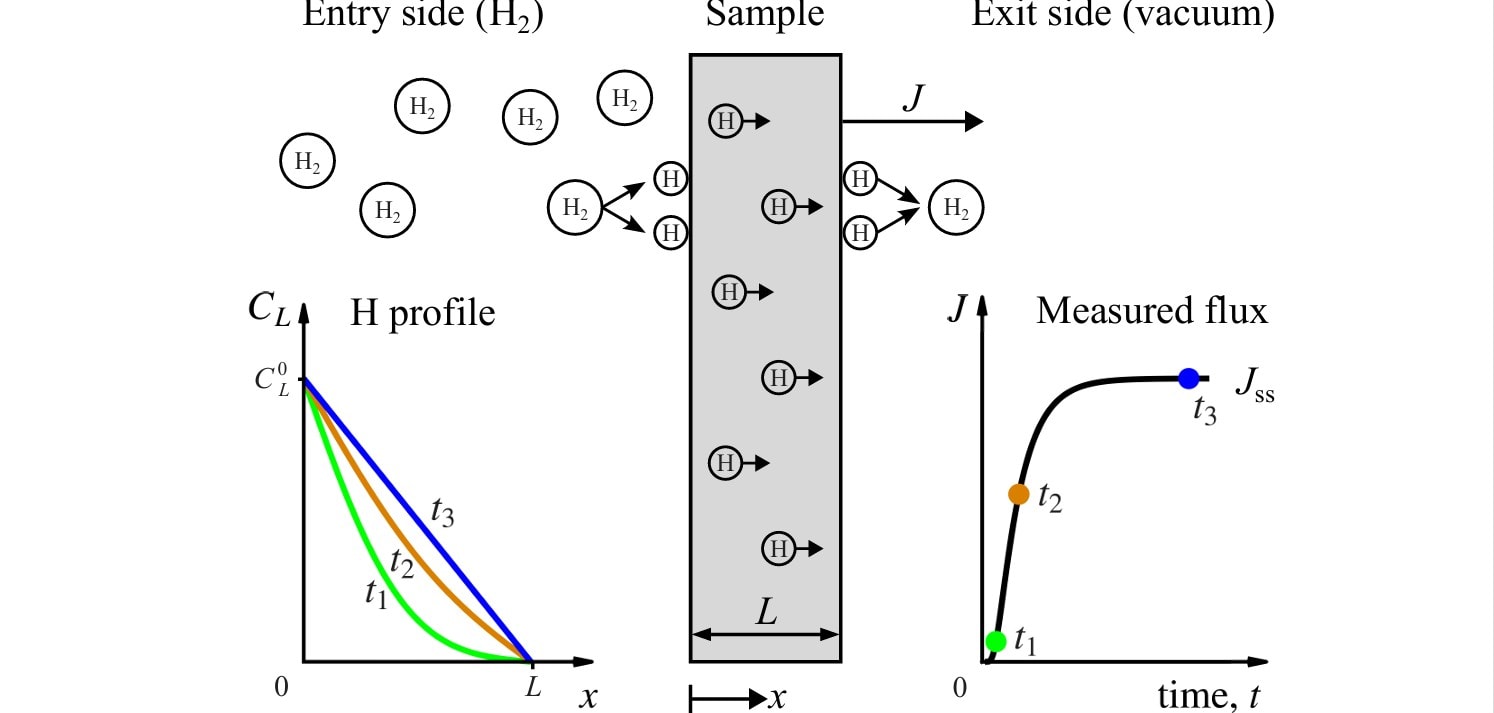
Figure 1. Diagram of hydrogen permeation through metal.
A thin material membrane separates two chambers. The upstream side is exposed to hydrogen gas at a controlled pressure, while the downstream side is maintained under ultra-high vacuum. Hydrogen molecules dissociate at the entry surface, hydrogen atoms diffuse through the material, and they then recombine and desorb from the exit surface. A mass spectrometer measures the emerging hydrogen flux as a function of time.
Electrochemical permeation remains widely used and is supported by established standards, but it generates hydrogen through an electrochemical reaction. The measured response can therefore be affected by evolving surface conditions, bubble formation, electrolyte chemistry and changing pH. It is also generally restricted to relatively low temperatures. A fully gaseous approach such as the one we have developed avoids these electrochemical artefacts, directly reproduces exposure to hydrogen gas and can be extended to non-electrically conductive materials, including polymers and coatings.
What is new about the permeation system developed in this study?
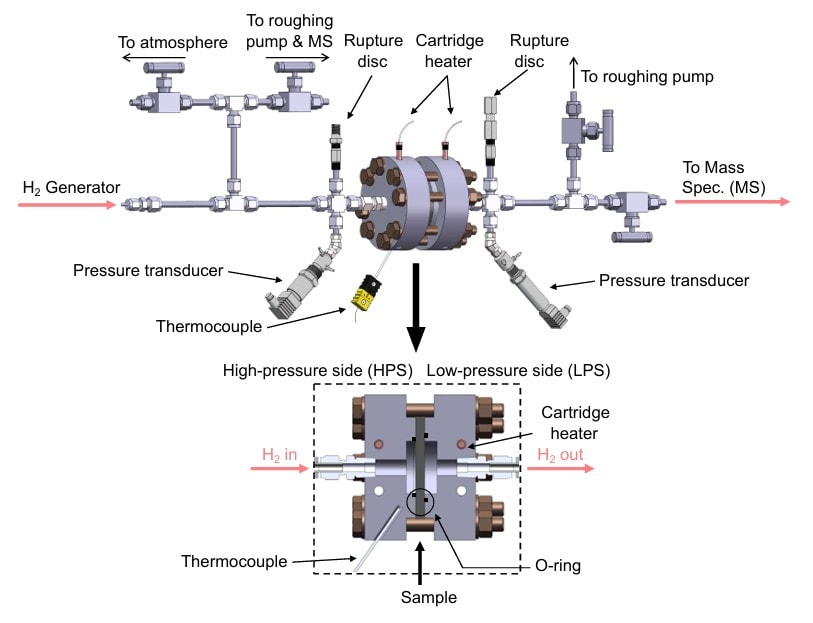
Everything. Although the principle of gas permeation is not new, the technology implemented in our platform is. The bespoke integration of a highly leak-tight permeation cell, an ultra-high-vacuum downstream system, on-demand hydrogen generation and calibrated mass-spectrometric detection makes it a genuinely novel, state-of-the-art experimental platform.
The permeation cell and sealing arrangement were specifically optimised to minimise leakage and background gases while enabling the testing of thin metallic membranes, addressing a long-standing experimental limitation in the field. Hydrogen is generated on demand using a new-generation electrolyser rather than supplied from cylinders within the laboratory, improving gas purity and safety.
Most importantly, hydrogen detection is performed using a Hiden Analytical HAL/3F RC 201 PIC quadrupole mass spectrometer calibrated with a certified hydrogen leak. Combined with the leak-tight cell and ultra-high-vacuum downstream system, this provides a hydrogen-flux detection limit of 1.98 × 10⁻⁹ mol H/(m²·s). This sensitivity enables reliable measurement of the very low permeation fluxes encountered near room temperature and at low hydrogen pressures, including pressures below 1 bar.
Reliable gas permeation measurements under these conditions have historically been limited by leakage, high background signals, insufficient detection sensitivity, poor standardisation of surface preparation and reliance on electrochemical detection. Our platform and methodology address these limitations while supporting safe operation in a conventional laboratory with the appropriate engineering controls. The current cell is designed for operation up to 15 bar and 200 °C, and an upgraded system capable of reaching 200 bar and 500 °C is under development for more demanding applications.
What did this high-sensitivity gas permeation platform enable you to uncover?
The platform allowed us to separate the effects of specimen preparation, residual gases, pressure and temperature on hydrogen transport. The clearest finding was that the surface can control the entire measurement. At room temperature, native iron oxides only a few nanometres thick could severely restrict or completely suppress hydrogen permeation. The most reliable measurements were obtained after removing the oxide by acid pickling and coating both surfaces with palladium. Alternatively, exposure to hydrogen at 150 °C could activate initially blocked surfaces through hydrogen-assisted oxide reduction.
By simultaneously monitoring hydrogen, oxygen, water vapour and nitrogen, we also showed that even trace residual oxygen can reduce the measured hydrogen flux by altering hydrogen entry at the surface. This means that specimen preparation, seal condition, evacuation procedures and background-gas composition must be carefully controlled and reported if measurements from different laboratories are to be compared reliably.
Figure 2 (right). High-resolution H₂ permeation system.
Once these surface and environmental effects were minimised, the measurements followed the behaviour expected for intrinsic transport through pure iron. At 25 °C, the steady-state hydrogen flux increased with the square root of pressure between 1 and 5 bar, in agreement with Sieverts’ law. Diffusivity and permeability also followed Arrhenius behaviour between 25 and 150 °C. Together, these results demonstrate that the platform can distinguish surface-controlled effects from bulk hydrogen diffusion and reliably quantify intrinsic transport properties.
The broader message is that two nominally identical specimens can produce very different permeation results simply because their surface histories or testing environments differ. Controlling these factors is therefore essential for reproducible hydrogen permeation measurements.
What role did Hiden Analytical’s mass spectrometry technology play in the research?
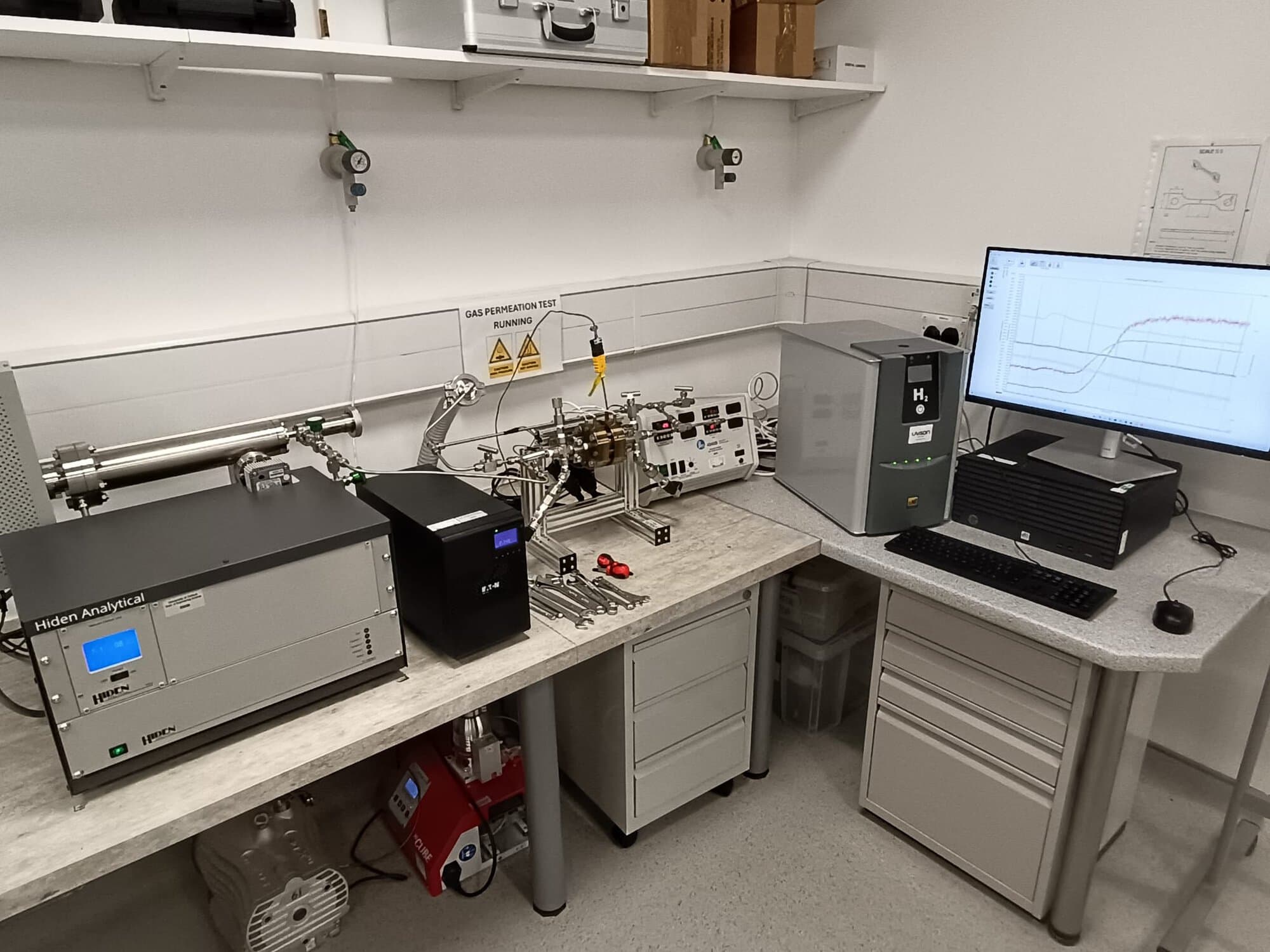
Hiden HAL/3F RC 201 PIC quadrupole mass spectrometer formed the core of the downstream detection system. With support from Hiden Analytical, it was integrated directly into the permeation platform while minimising dead volume between the specimen and detector. This helped maintain a very low downstream background pressure and ensured a rapid response to changes in hydrogen flux.
Figure 3 (left). Hiden Analytical hydrogen gas permeation set up.
Its pulse-ion-counting detector, wide linear dynamic range and fast acquisition capability enabled us to measure extremely low hydrogen fluxes while still capturing the much larger signals generated at elevated temperatures. Following calibration with a certified hydrogen leak, the system achieved a hydrogen-flux detection limit of 1.98 × 10⁻⁹ mol H/(m²·s).
The instrument could also monitor residual oxygen, water vapour, nitrogen and other gas species during system conditioning, allowing us to relate changes in hydrogen permeation directly to background-gas composition. Importantly, this high sensitivity means that reliable measurements can be performed at relatively low hydrogen pressures, improving the overall safety of the experiments.
What are the wider implications of the work, and where will the method be applied next?
The study provides a methodological framework for making gaseous hydrogen permeation measurements more reproducible and comparable. It also offers a possible explanation for the large scatter reported in historical hydrogen diffusivity measurements for pure iron, particularly at lower temperatures: much of this variability may arise from uncontrolled surface conditions rather than from differences in intrinsic bulk transport.
The platform is already being applied to technologically relevant materials, including 316L stainless steel, additively manufactured Ni-based alloys, pipeline coatings and multi-material systems. Owing to its high sensitivity, measurable hydrogen fluxes can be detected at relatively low temperatures and modest hydrogen pressures, enabling safer testing while still resolving transport through low-permeability materials.
The method is already being extended to systematic studies of gas impurities, temperature, pressure, protective coatings and complex material architectures, as well as to future experiments involving mechanical loading. These measurements can improve material qualification and predictive modelling for hydrogen pipelines, storage systems and other components operating in hydrogen service.
Project Summary by: Dr. Alfredo Zafra, Senior Research Associate, Facility Manager, University of Oxford, Emilio Martínez-Pañeda, Professor of Engineering Science, Hydrogen Embrittlement Laboratory, Department of Engineering Science, University of Oxford, and Rongrui Li, PhD student, Department of Engineering Science, University of Oxford.
Paper Reference: Li, R., Zafra, A., Harris, Z. D. and Martínez-Pañeda, E. (2026) “High-Sensitivity Hydrogen Gas Permeation: System Development, Sample Preparation, and Influence of Testing Variables.” Experimental Mechanics. Springer Science and Business Media LLC, June. DOI: 10.1007/s11340-026-01339-6.
Hiden Product: 3F PIC.
Reference Number: AP-3FPIC-202107.
