
In this study, we examine the depth distribution of deuterium in materials relevant to nuclear fusion applications, with particular emphasis on tungsten and the copper alloy (Cu1Cr0.1Zr). The ability to accurately determine the penetration and retention of hydrogen isotopes in these materials is of fundamental importance for fusion research, since plasma-facing and heat-exhaust components must withstand extreme operating conditions, including intense particle irradiation, elevated temperatures, thermal gradients, and long-term exposure to reactive species. In this context, a detailed understanding of deuterium behaviour beneath the surface is essential for evaluating material performance, predicting degradation mechanisms, and supporting the development of more resilient fusion-relevant components.
To address this challenge, we employed Secondary Ion Mass Spectrometry (SIMS), a highly sensitive technique capable of resolving low-Z species throughout the material depth. SIMS is particularly valuable in this field because it provides depth-resolved information on isotopic species that are otherwise difficult to detect with conventional analytical methods. However, the interpretation of SIMS depth profiles is not straightforward, as it can be significantly influenced by matrix effects, surface morphology, crater evolution during profiling, and instrumental parameters. For this reason, the present work was designed not only to determine deuterium depth distributions, but also to identify the factors responsible for the differences observed between experimental profiles and theoretical expectations.
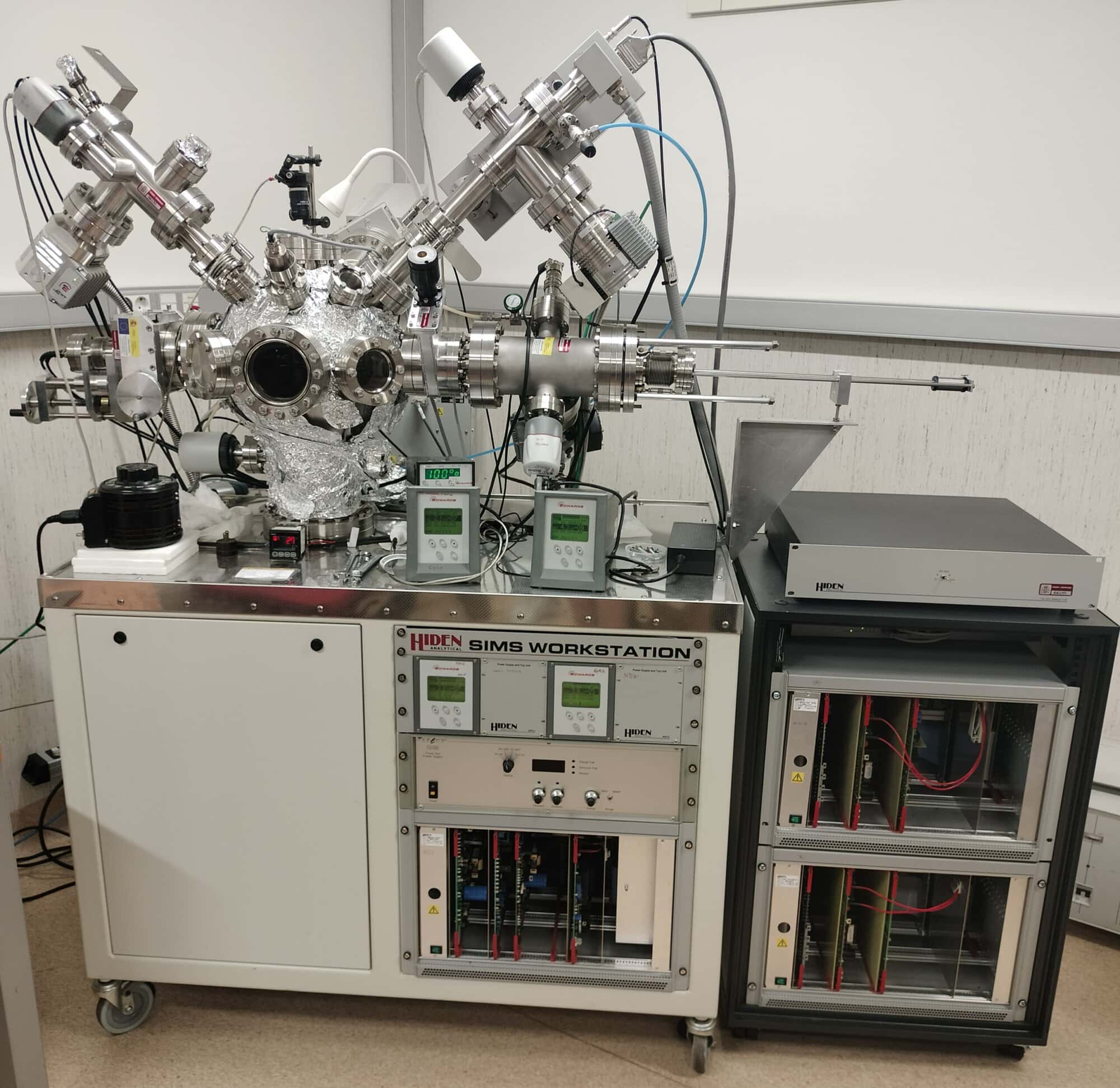
Figure 1. Hiden Analytical SIMS Workstation.
Deuterium ions of known fluence were implanted into W and Cu1Cr0.1Zr at three different irradiation energies, allowing us to probe implantation at different depths. Silicon samples were also implanted under comparable conditions and used as reference standards. The resulting SIMS depth profiles were compared with SRIM-based simulations, which were used to estimate the projected ranges and expected implantation distributions. While the overall trends were broadly consistent, the experimental profiles showed clear deviations in peak shape, intensity, and symmetry, especially as the implantation depth increased. These discrepancies became more pronounced at deeper ranges, suggesting that the analytical response depends not only on the ion distribution itself, but also on the interplay between the material matrix and the measurement conditions.
To clarify the origin of these effects, complementary characterisation techniques were employed, including scanning electron microscopy, electron backscatter diffraction, X-ray diffraction, and profilometry. These analyses were used to assess possible contributions from microstructural features, crystallographic orientation, surface roughness, and depth-profile crater evolution. The combined results indicate that the observed broadening and asymmetry in the SIMS signals are likely associated with a combination of factors, including surface roughening during depth profiling, redeposition of sputtered material, and instrumental limitations at greater depths, rather than with major structural changes induced by deuterium implantation.
To the best of our knowledge, this work is among the first to systematically examine the variation of deuterium SIMS signals with depth in fusion-relevant materials while considering multiple contributing factors in a unified framework. We believe that these findings will be useful for improving the reliability of SIMS depth profiling in materials research and for refining the interpretation of hydrogen isotope retention data in the context of future nuclear fusion technologies.
Project Summary by: Guiomar Delgado Soria, Fusion Technology Division, CIEMAT, Ministerio de Ciencia, Innovación y Universidades.

Paper Reference: G.D. Soria, M. González, M. Roldán, On the knowledge of depth effect on secondary ion mass spectrometry profiling of deuterium-implanted fusion matrices, Materials Characterization, Volume 234, 2026, 116216, ISSN 1044-5803. DOI: 10.1016/j.matchar.2026.116216.
Hiden Product: SIMS Workstation.
