
Plastic pollution is increasingly recognised as a major environmental challenge, with nanoplastics being particularly difficult to remove using conventional wastewater treatment technologies. In our recent study, we developed a photovoltaic-driven hybrid electrochemical system capable of simultaneously removing polystyrene nanoplastics (PS-NPs) from urban treated wastewater and recovering renewable hydrogen (H₂), transforming wastewater treatment from a purely remediation-based operation into a resource-recovery process.
The system combines a boron-doped diamond (BDD) anode with a Ni-Fe stainless-steel mesh cathode in an electrochemical reactor powered by photovoltaic solar panels. This configuration couples two processes within the same system: advanced electrochemical oxidation of contaminants at the anode and hydrogen evolution at the cathode. The experimental setup was powered by two photovoltaic panels with battery backup, demonstrating the potential for operation using renewable electricity.
The divided-cell configuration showed the best overall performance. Under optimised conditions, the process achieved approximately 92% removal of polystyrene nanoplastics and 83% total organic carbon mineralisation. The strong oxidative performance was associated with reactive species generated at the BDD anode, particularly hydroxyl and sulfate-derived radicals. At the same time, green H₂ was continuously generated at the Ni-Fe cathode with a Faradaic efficiency close to 100%, demonstrating highly effective conversion of the transferred charge into hydrogen.
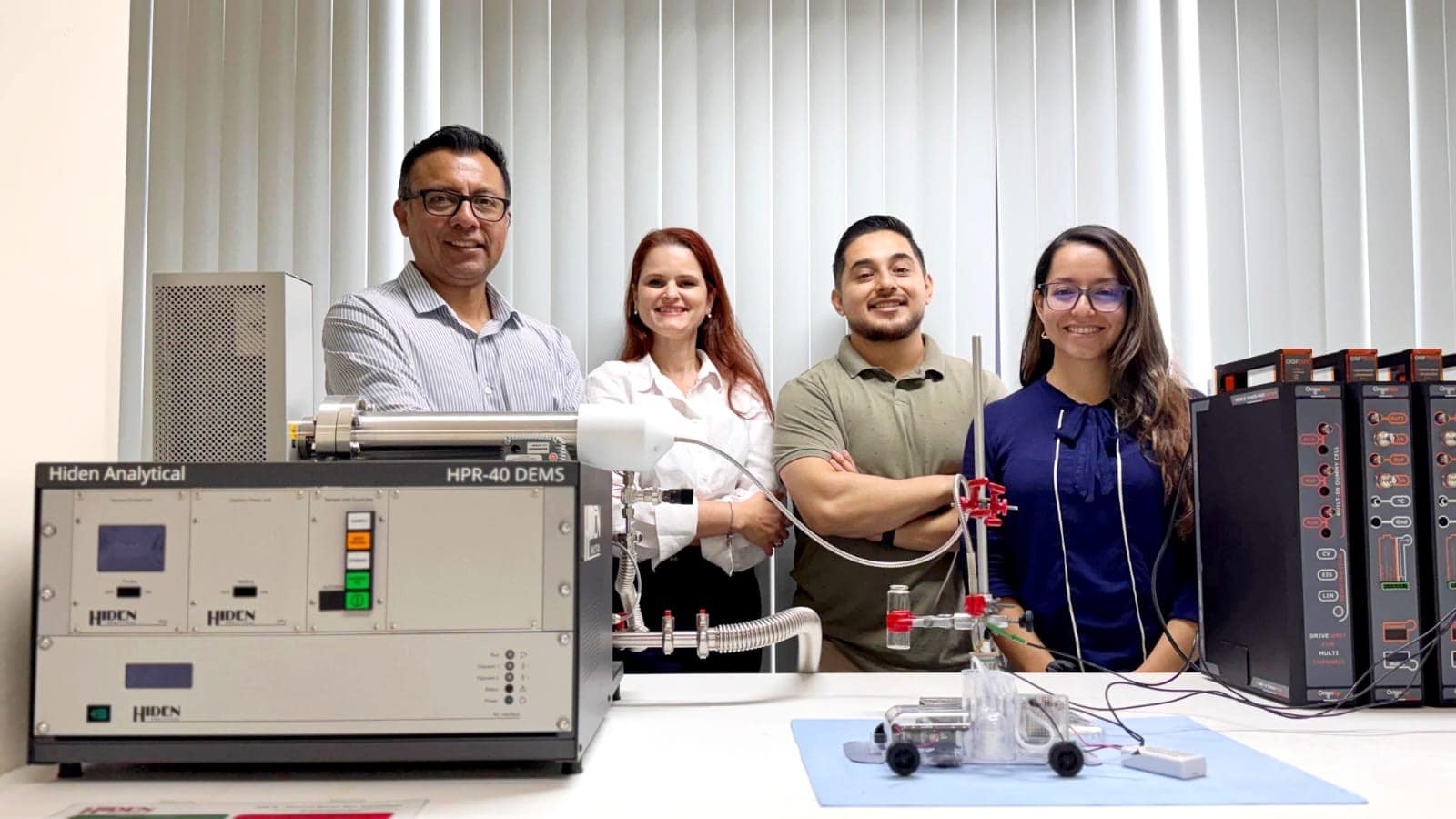
Figure 1. From left to right: Prof. Dr. Carlos Alberto Martínez-Huitle, Dr. Elisama Vieira dos Santos, Luis D. Loor-Urgilés, Tabata N. Feijoó.
A key aspect of the study was the real-time characterisation of the cathodically generated gas using a Hiden HPR-40 Differential Electrochemical Mass Spectrometry (DEMS) system, equipped with a triple-filter quadrupole mass spectrometer and QGA 2.0 software. This analytical platform enabled direct monitoring of the gaseous products evolved during electrolysis and was essential for evaluating hydrogen generation and identifying possible secondary gaseous products. DEMS measurements became particularly important when we investigated a circular water-use strategy. Instead of using fresh ultrapure water as the catholyte, the wastewater previously purified in the anodic compartment was reused for hydrogen production. Real-time monitoring of H₂ (m/z = 2) and N₂ (m/z = 28) confirmed that hydrogen remained the predominant cathodic product, while only a weak N₂ signal associated with residual nitrogen-containing species was observed. Remarkably, the regenerated water produced a stronger and more stable H₂ response than the conventional Milli-Q electrolyte, demonstrating its suitability as a catholyte for renewable hydrogen generation.
This approach therefore establishes a circular water-to-energy concept: treated wastewater is first purified by electrochemical oxidation and subsequently reused as a feedstock for hydrogen production. Reusing the treated water substantially reduced the normalised environmental E-factor from 0.998 for the Milli-Q catholyte to 0.04, highlighting the sustainability benefits associated with reduced freshwater demand.
The study demonstrates how renewable electricity, advanced electrochemical oxidation, hydrogen recovery, water reuse, and real-time gas analysis can be integrated into a single platform. The Hiden HPR-40 DEMS system provided critical analytical evidence supporting the transition from conventional pollutant removal toward a circular strategy in which wastewater can simultaneously become a source of clean water and renewable energy.

Paper Reference: Pérez-López, A., Domínguez, C.M., Loor Urgilés, L.D., Martínez Huitle, C.A., Cotillas, S. and dos Santos, E.V. (2026). Enhancing nanoplastics removal and green hydrogen recovery through photovoltaic-driven hybrid electrochemical treatment of urban treated wastewater. Chemical Engineering Journal, [online] 533, p.174957. DOI: 10.1016/j.cej.2026.174957.
Hiden Product: HPR-40 DEMS.
Reference Number: AP-HPR-40-202334.
HPR-20 OEMS now equivalent Hiden product to HPR-40 DEMS with QIC heated flexible capillary inlet with ultra-low flow sample flow rate – 250 µLmin-1 as used in this research.
