
Improving seed germination and early seedling establishment under water stress is a major challenge for modern agriculture. In this study, we investigated the use of cold atmospheric plasma (CAP) as a physical, non-chemical seed treatment to enhance the tolerance of sunflower (Helianthus annuus L.) seeds to water deficit during germination and early growth. The work combined biological assays with detailed plasma diagnostics to better understand the link between plasma properties and biological responses.
Dry sunflower seeds from two commercial hybrids with contrasting dormancy behaviour were treated using an ambient air dielectric barrier discharge (DBD) plasma system. A key aspect of the study was the careful control of plasma operating parameters, particularly the electrode gap, which was shown to strongly influence discharge stability, power deposition, and plasma–seed interaction. Electrical measurements and optical emission spectroscopy were used to assess discharge homogeneity and excited species in the plasma phase.
To identify stable reactive species generated during plasma operation, quadrupole mass spectrometry was performed using a Hiden Analytical HPR-20 system. The instrument was operated in residual gas analyser (RGA) mode with electron impact ionisation at 70 eV, enabling mass scans from 1 to 50 amu with high sensitivity. Gas sampling was achieved via a heated (200 °C), chemically inert quartz capillary, coupled to a three-stage differentially pumped inlet system, allowing accurate detection of plasma-generated species while minimising recombination and adsorption effects.
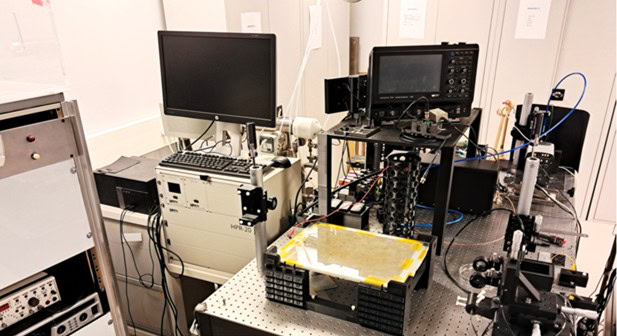
Figure 1. HPR-20, Hiden Analytical.
This configuration provides rapid response times and reliable analysis of low-concentration gaseous species under atmospheric plasma conditions. Mass spectrometry measurements revealed that, among the detected species, ozone (O₃) was the dominant long-lived reactive molecule produced by the discharge. Importantly, ozone production was found to be highly sensitive to reactor configuration, with significantly higher signals observed when seeds were present in the plasma gap. This effect was attributed to the dielectric nature and surface morphology of the seeds, which locally enhance the electric field and promote microdischarge activity. Short-lived reactive species such as atomic oxygen, hydroxyl radicals, and nitric oxide were not directly detected by mass spectrometry, likely due to rapid quenching or recombination during transport, but their transient presence at the seed surface cannot be excluded.
Biological experiments demonstrated that CAP treatment significantly improved germination under water stress, particularly for dormant sunflower seeds, where both germination rate and speed increased under PEG-simulated drought conditions. For non-dormant seeds, positive effects were mainly observed under severe water stress. Greenhouse trials further showed enhanced seedling emergence and early growth under limited soil moisture, indicating that plasma treatment influenced both germination and post-germinative development.
In conclusion, this work highlights the importance of combining controlled plasma processing with advanced diagnostic tools such as quadrupole mass spectrometry to link plasma chemistry with biological outcomes. The use of the Hiden HPR-20 system provided key insights into the nature and stability of plasma-generated species, supporting the development of cold plasma as a promising, tunable technology for seed treatment under challenging environmental conditions.

Paper Reference: Taras, L., Bailly, C. and Dufour, T. (2025) ‘Treatment of sunflower seeds by cold atmospheric plasma enhances their tolerance to water stress during germination and early seedling development.’ Journal of Physics D: Applied Physics. IOP Publishing, 59(1) p. 015210. DOI: 10.1088/1361-6463/ae2ae6.
Hiden Product: HPR-20.
