
The increasing generation of glycerol as a waste product from biodiesel production necessitates its utilization in various applications, particularly in producing industrial chemicals. However, the focus of prevalent research on this process is on using noble metals as catalysts. This focus should shift to low-cost and abundant elements to ensure sustainability. Therefore, this study uses activated carbon from coconut shells to support a bimetallic copper-nickel catalyst for converting glycerol into value-added products. The catalyst was synthesised via the wet impregnation method and characterised for its surface morphology, surface functional groups, and surface area properties. During the reaction, the gas-phase products obtained were collected with a gas bag. The sample was analysed using a Hiden HPR-20 mass spectrometer (Hiden, UK).
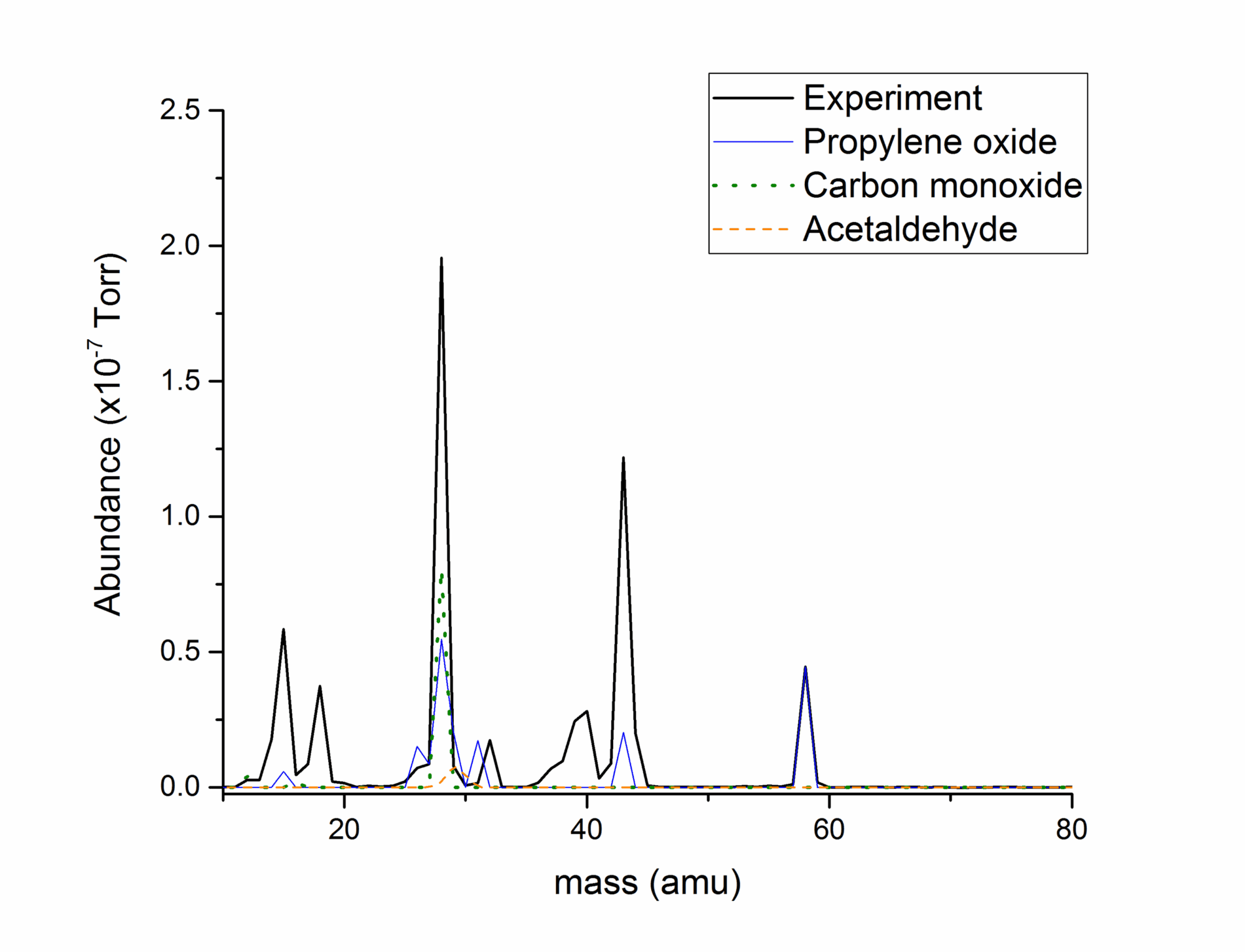
Figure 1: Deconvolution of MS spectrum of gaseous products at 20 wt% initial glycerol concentration, 20 bar and 200°C.
Deconvolution of the mass spectrometry peaks was performed using NIST MS Search 2.0 software on the fragmentation peaks, as shown in Figure 1. This analysis revealed that at a 20 wt% initial glycerol concentration, and under operating conditions of 20 bar and 200 °C, acetic acid, propylene oxide, carbon monoxide, and acetaldehyde were detected as products. This finding allows for a possible mechanism to be proposed, considering the aqueous-phase reforming of glycerol and the dehydration process. In conclusion, glycerol can be converted into valuable chemicals under mild conditions using a cost-effective catalyst.
Project Summary By: Dr Ibrahim bin Yakub, Universiti Malaysia Sarawak (UNIMAS), Sarawak, Malaysia.

Paper Reference: Ibrahim Yakub, Khairul Anwar Mohamad Said, Mohamed Afizal Mohamed Amin, Ahmad Beng Hong Kueh and Mugahed Amran (2024) ‘Aqueous-phase Reforming of Glycerol using Cu-Ni Bimetal Catalyst Supported over Coconut Shell Activated Carbon.’ Journal of Advanced Research in Fluid Mechanics and Thermal Sciences. Akademia Baru Publishing, 115(1) pp. 193–205. DOI: 10.37934/arfmts.115.1.193205.
Hiden Product: HPR-20.
