
Breathing is one of the most basic of human functions and every human being on the planet breathes the same gas mixture, atmospheric air. However, when the respiratory system is affected by disease then medical teams sometimes need to use medical gases to manage the person’s condition. Administering medical gases simply, without the application of positive pressure into the airway, in a fashion mimicking breathing atmospheric air, is easy to do with simple masks and nasal cannula. However, due to the interplay of the devices used and the person’s respiratory pattern there is invariably a variable dilution of the administered medical gas with atmospheric air. This means that the actual concentrations of the medical gases being administered into the lungs varies, even within each breath and between each breath – a dynamic situation which lacks precision. The human respiratory system is complicated, with the output variable of arterial oxygen saturation being affected by several different physiological input variables. First among these input variables is knowing exactly what gas is in the lungs at given point in time.
Dynamic assessment of the respiratory system in clinical practice requires the ability to accurately change and then maintain constant concentrations of administered medical gases, followed by measurement of the response. Having this ability also allows appropriate and safe concentrations of medical gases to be used, so the patient is supported correctly whilst clinical assessment is taking place. This in turn buys time to plan further clinical management and to safely move the patient to the most appropriate part of the hospital where that care can be delivered.
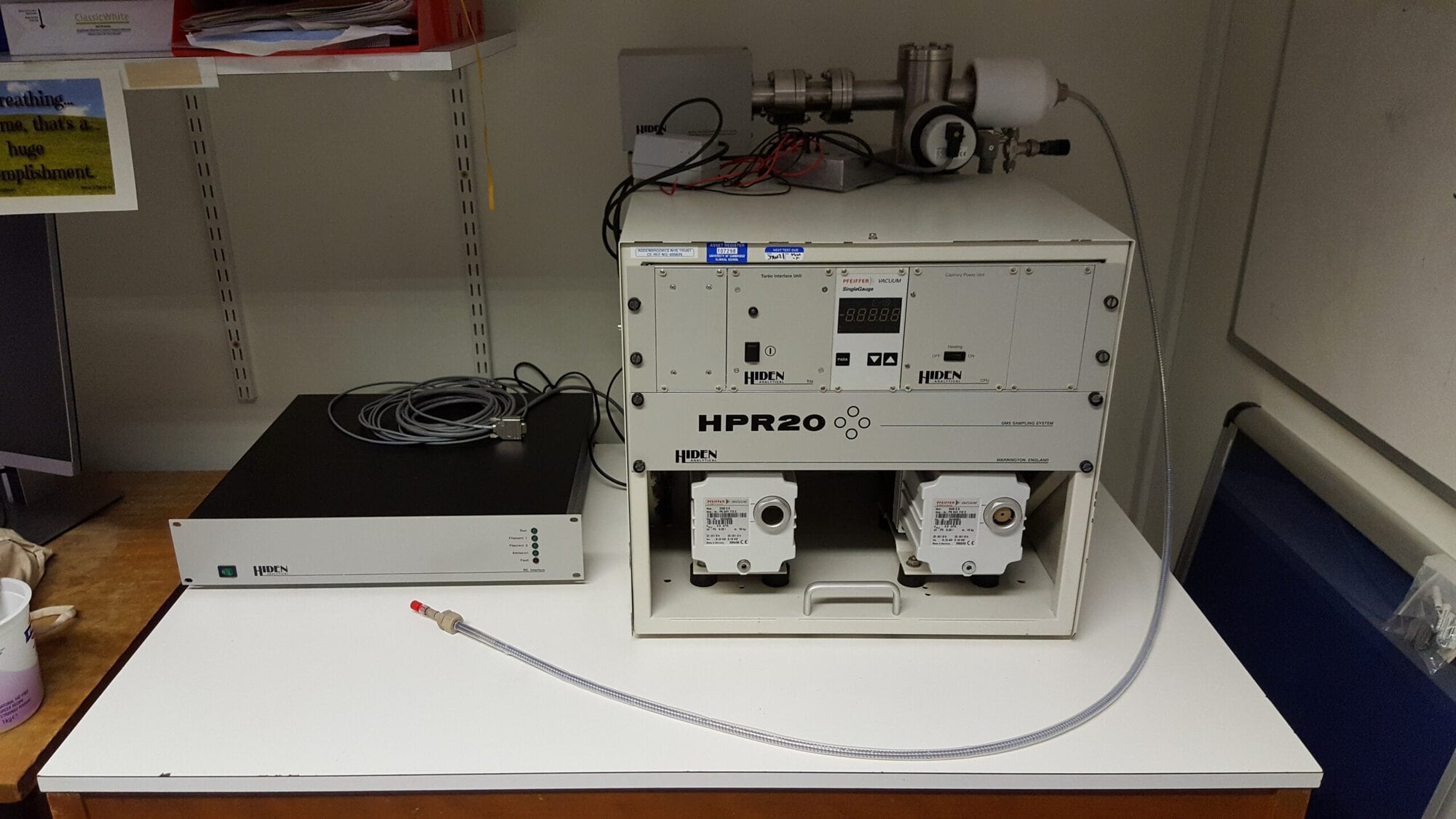
Figure 1. Hiden Analytical HPR-20 system. QIC sleeved with PEEK thermoplastic parts to reduce current outflow from the QIC to medical device standards.
This research has focused on designing and producing a simple medical gas administration system which eliminates all device and respiratory pattern factors from the administration process, in conjunction with being easy to use and requiring no patient effort beyond the task of breathing. A Hiden Analytical HPR-20 system, modified to reduce current outflow to medical device standards, was used for real time gas analysis throughout the project, using a simple mouthpiece with sampling line attached to the QIC. The result is the Moulded Gas Interface (MoGI) mask, a device which eliminates device factors and the wearer’s respiratory pattern to allow accurate simple medical gas administration. This novel approach brings the administration device, the gas to be administered and the person breathing the gas together, by making the correct use of the device dependent on correctly fitting it to the wearer and providing adequate flow to meet the wearer’s needs. This is achieved by introducing the total flow of gas going into the device around a vented conduit, that interfaces with a circumferential simple bulk seal created against the wearer’s face, before the gas continues onto reservoir and breathing chambers. Simple visual observation of chamber filling in the device during use, together with adjustment of gas flow allows both adequacy and efficiency of the medical gas administration, with gases being mixed outside of the device using pre-existing blending technology. For more details together with a more in-depth background to the clinical rationale for the MoGI mask, the reader is directed to the associated paper.
Project Summary by: Thomas Standley, Consultant Anaesthetist / Intensivist, Worthing Hospital, University Hospitals Sussex NHS FT.
Paper Reference: Standley, T. D. A. (2026) ‘Achieving accurate simple medical gas administration: A message from the bench.’ Journal of the Intensive Care Society. SAGE Publications, 27(2) pp. 230–233. DOI: 10.1177/17511437261425057.
Hiden Product: HPR-20.
The research in this paper was conducted using an instrument now named the HPR-20 EGA.
